“Agricultural Products” search results (600)

Introduction to the flavor and taste characteristics of El Salvador coffee manor with mild sour, bitter and sweet taste
Sanchez Salem is president of El Salvador. He was born on June 18, 1944 in Xattepec, El Salvador. After graduating from Alberto normal School, he taught in a primary school in his hometown for 10 years. In 1970, he participated in the creation of the first left-wing armed force in El Salvador, the Forces d é mocratiques de lib é ration du peuple (FPLF), and became general secretary of the organization in April 1983. Since then, the organization and other left-wing political and military groups in Saudi Arabia
2016-08-12 Sweet mild medium El Salvador coffee manor producing area flavor taste special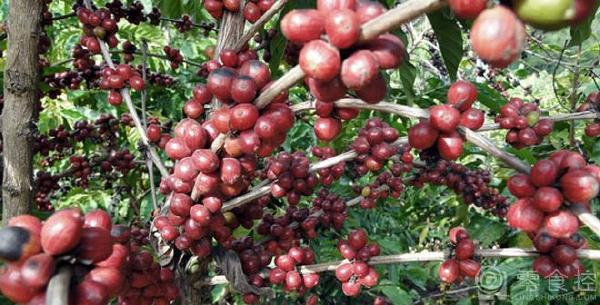
The latest news of the world coffee industry: the decline of coffee cultivation in Costa Rica
According to the Costa Rican "financier" newspaper reported on December 14. The planting area of coffee in Colombia has decreased by 6.4% in the past 30 years. It was 89881 hectares in 1984 and only 84133 hectares remained in 2015. Coffee gardens have to give up their land to real estate, especially in metropolitan areas. At the same time, the changes in coffee prices in the world have gradually reduced the profits of coffee cultivation, which are all placed on the main side of the coffee garden.
2015-12-23 World Coffee Industry latest Information Costa Rica farming decline Goss
How do coffee grounds turn waste into treasure?
Dry composting: put the coffee grounds on the balcony, stir it every day, and put it into the pot after about 10 days. Wet composting: put the coffee grounds on the balcony without stirring it to become moldy. A few days later, it is found to be full of mold, and then mixed with sand and put into the pot. How to convert coffee grounds into horticultural compost: coffee also belongs to agricultural products, although it goes through the process of baking, but the basic quality remains the same.
2014-09-02 Coffee knowledge coffee grounds utilization coffee grounds transformation
The Taste and Flavor characteristics of aricha Coffee beans
The color of Yirgacheffe Aricha Grade 1 raw beans is yellow and green, which is a typical color of sun-cured coffee. It is uniform and full, with few defective beans. It is packaged and exported in ordinary sacks. The basic information of coffee is printed and dyed on the sacks (processing plant, exporter, ICO code, treatment methods, producing areas). Inside the sacks are plastic bags for agricultural products.
2016-10-21 Sun Yega Sheffield aricha coffee beans taste flavor description place
Coffee becomes the mainstream instead of tea South Korea actively promotes the development of domestic tea industry
South Korea's coffee imports surged 13.6% from January to May this year, reaching 52660 tons, Yonhap news agency said, citing data released by South Korea's Agricultural and Aquatic Food Circulation Corporation (aT) on the 22nd.
2014-06-23 Coffee News Korean Coffee and Tea Industry
The current situation of Costa Rican coffee market Costa Rica coffee production
Coffee exports account for 25% of Costa Rica's total exports. Costa Rica has also benefited from the establishment of the Central American Institute for Agricultural Research (TurrialbaoftheCentralAmericanAgriculturalResearchlnstitute, referred to as IAAC) in Tarasu, which is an important international research centre. Costa Rica's coffee industry was originally owned by the Costa Rican coffee industry.
2016-03-23 Costa Rica coffee market status quo output exports occupation Gos
Introduction to the Flavor Coffee of La Tisa Manor in Guatemala
The capital, Guatemala City, is the largest city in Guatemala and the city of Central America. It covers an area of 996 square kilometers and has a population of 3.1 million (2010). Founded in 1524. Due to repeated damage by the earthquake, he moved to his present site in 1776. How low buildings are in the city. It has been the capital since 1779. It was the capital of the Central American Federation from 1823 to 1838. A distribution center for coffee, corn, wheat and other agricultural products. Hold
2016-08-20 Monosodium glutamate fine Guatemala Ratti manor coffee flavor taste characteristics essence
How to convert coffee grounds into horticultural compost
Dry composting: put the coffee grounds on the balcony, stir it every day, and put it into the pot after about 10 days. Wet composting: put the coffee grounds on the balcony without stirring it to become moldy. A few days later, it is found to be full of mold, and then mixed with sand and put into the pot. How to convert coffee grounds into horticultural compost: coffee also belongs to agricultural products, although it goes through the process of baking, but the basic quality remains the same.
2014-04-27 How coffee conversion gardening composting dryness placed on the balcony
Flavor and taste characteristics of Nicaraguan coffee beans introduction to manor producing areas of variety treatment method
A city of southwest Nicaragua and the capital of Massaya province. Located at the eastern foot of Masaya Volcano, 25 kilometers northwest from Managua. The population is 43000 (1980). The industrial and commercial center of the surrounding agricultural area (which mainly produces tobacco). Famous for producing Indian handicrafts (embroidery, palm hats, etc.). There are tobacco, shoes, soap, leather and other industries. Railway, road and air transportation are convenient.
2016-10-17 Nicaragua coffee beans flavor taste characteristics varieties treatments manors producing areas
Papua New Guinea Coffee Flavor taste Manor characteristics of Paradise Bird Manor
The local yield is small, and about 85% of the total coffee is produced by the garden cultivation system of small farmers. Small farmers join local cooperatives and share their processing equipment. Coffee is Pakistan's second largest export of agricultural products, which shows the importance of coffee industry to Pakistan's economy. Because the variety of coffee is different from that of Indonesia, the elevation is also higher than that of Sumatra, plus the use of water washing
2016-08-06 Papua New Guinea Coffee Flavor Taste Manor producing area characteristics introduction Day
Papua New Guinea Coffee Flavor taste Manor characteristics of Paradise Bird Manor
The local yield is small, and about 85% of the total coffee is produced by the garden cultivation system of small farmers. Small farmers join local cooperatives and share their processing equipment. Coffee is Pakistan's second largest export of agricultural products, which shows the importance of coffee industry to Pakistan's economy. Because the variety of coffee is different from that of Indonesia, the elevation is also higher than that of Sumatra, plus the use of water washing
2016-08-06 Papua New Guinea Coffee Flavor Taste Manor producing area characteristics introduction Day
For Rwandan coffee beans, it is better to buy raw beans or roasted beans.
Rwandans have been growing coffee since colonial times, but until 1999, its products were still classified as below Class C and were not popular in the global market. The reason for the poor quality is that farmers do not have a fixed procedure for washing coffee beans and do not process coffee fruits according to specifications in time. Buyers buy coffee beans at $0.33 per kilogram, and farmers keep warm by the meagre profits earned at low prices.
2016-05-23 Rwanda coffee beans flavor household use buy raw beans or already baked
Introduction of washed Rwanda coffee beans classification of fine coffee
Rwandans have been growing coffee since colonial times, but until 1999, its products were still classified as below Class C and were not popular in the global market. The reason for the poor quality is that farmers do not have a fixed procedure for washing coffee beans and do not process coffee fruits according to specifications in time. Buyers buy coffee beans at $0.33 per kilogram, and farmers keep warm by the meagre profits earned at low prices.
2016-06-28 Washing Rwanda coffee beans introduction boutique coffee classification people from
Aromatic Burundi Fine Coffee Flavor Taste Manor Features
Burundi is one of the least developed countries in the world declared by the United Nations. The economy is dominated by agriculture. More than 90% of the population is engaged in agriculture and animal husbandry. The main food crops are corn, rice, sorghum, potato and banana. The main cash crops are coffee, tea, cotton and so on. Animal husbandry has declined in recent years. The main industries are agricultural products processing, textile, cigarette, power generation and so on. Burundi
2016-08-11 Aroma Burundi Boutique Coffee Flavor Taste Manor Region Characteristics
Introduction of Costa Rican boutique coffee Costa Rican coffee market Costa Rican coffee mouth
Coffee exports account for 25% of Costa Rica's total exports. Costa Rica has also benefited from the establishment of the Central American Institute for Agricultural Research (TurrialbaoftheCentralAmericanAgriculturalResearchlnstitute, referred to as IAAC) in Tarasu, which is an important international research centre. Costa Rica's coffee industry was originally owned by the Costa Rican coffee industry.
2016-03-30 Costa Rica boutique coffee introduction market export occupation Goss
Costa Rican boutique coffee market Costa Rican coffee growing quality of Costa Rican coffee
Coffee exports account for 25% of Costa Rica's total exports. Costa Rica has also benefited from the establishment of the Central American Institute for Agricultural Research (TurrialbaoftheCentralAmericanAgriculturalResearchlnstitute, referred to as IAAC) in Tarasu, which is an important international research centre. Costa Rica's coffee industry was originally owned by the Costa Rican coffee industry.
2016-03-31 Costa Rica boutique coffee market cultivation export occupation Gos
The traditional coffee producing area began to take the boutique coffee route. Puerto Rico was once the main coffee producing area.
Puerto Rico used to be a major coffee producing area more than a century ago, but coffee production here has been declining for nearly half a century, and now it is only about 10 million pounds a year, a drop in the bucket compared with the past. the acreage of coffee fell from nearly 200000 acres in the 1960s to about 40, 000 acres in 2010. At the same time, there are even fewer coffee exports. Farm reduction
2016-04-19 Tradition coffee origin start boutique route Puerto Rico once major production
How to convert coffee grounds into gardening compost coffee grounds
Dry composting: put the coffee grounds on the balcony, stir it every day, and put it into the pot after about 10 days. Wet composting: put the coffee grounds on the balcony without stirring it to become moldy. A few days later, it is found to be full of mold, and then mixed with sand and put into the pot. How to convert coffee grounds into horticultural compost: coffee also belongs to agricultural products, although it goes through the process of baking, but the basic quality remains the same.
2015-03-06 How to coffee conversion gardening composting use dryness compost put
Introduction of Fine Coffee Bean producing areas-- Peruvian Coffee from Peruvian Coffee Manor in South America
Well-known representative coffee: Peru (Peru) Peru is one of the major coffee producing countries in South America, and coffee is Peru's largest export agricultural product, which has grown greatly in recent years. Peru has the Andes that run parallel to the coast. More than 90% of Peruvian coffee is grown in the north, in valleys east of the capital Lima, and in forest areas on the slopes of the Andes. Peruvian coffee
2016-03-24 Boutique coffee beans producing areas introduction South America Peru coffee manor taste well-known
Introduction to the flavor and taste of Rwandan coffee beans the characteristics of Rwandan coffee beans
In 2000, the Mayor of Malaba requested development assistance from the National University of Rwanda (UNR), which is located near the city of Butare, and the following year, the National University of Rwanda assisted in the establishment of the Joint strengthening Rwanda Agricultural Partnership (PEARL). PEARL is also supported by several organizations: the United States Agency for International Development (USAID), Michigan State University, Texas A & M University, and
2016-07-21 Rwanda coffee beans flavor taste introduction boutique coffee features 2000